Showing posts with label modern variety. Show all posts

Monday, January 1, 2018

The Top Fifty Red Winegrapes


A new "Coffee Table Book"  is out, on the 50 most-important red winegrapes, and one of the lauded grapes is a modern variety (Baco Noir)! It's not my personal favorite--there are so many good modern grape varieties now--but it is a huge step in the right direction.

Saying that you like wine, but also believing there are no good modern varieties of winegrapes, is like saying you are an expert on cars but you haven't heard of the Chevrolet Corvette or the Toyota Camry.


Red Wine: The Comprehensive Guide to the 50 Essential Varieties & Styles


I agree that the conventional wisdom is slowly changing, as it always must, in the face of new truth. Drat that it changes so slowly. But drip drip drip goes the water, falliing fruitlessly upon the giant rock of ignorance, and one day we marvel that the rock is gone.


Saturday, September 28, 2013

Good Gracious! The rain!

It is rare indeed to see rains this heavy come so early in the Fall. We've had a LOT of rain over several precipitative spells this month, whereas usually September is fully dry for at least the first 2-3 weeks. And the first rains are usually little affairs, whereas today we're facing two or three waves of a dying typhoon.

I think that most of the Pinot Noir is still hanging in the vineyards. It should stop raining by next Thursday or so, and a few days of sun will help, but this is simply too much rain.

Modern varieties, however, ripen earlier and all mine are picked (Cayuga was the last; it came in yesterday, whereas Leon Millot was picked two weeks ago and is already finished not only with primary fermentation but also with MLF!).

Every year is different. Just look at our current radar image:


Thursday, September 19, 2013

Bugs!

Egads! Just look at the yellow jackets on a cluster of grapes in British Columbia:


I harvested near Aurora last week, and there it was honeybees all over the fruit, extracting the precious high-sugar water.

Growing grapes isn't easy. Here is an article with some of the insect-related reasons why it's difficult.

The 2013 harvest is going well. Many good wines will be made in the PacNW, but yields are down due to rains during bloom, which lowered the number of berries that set. As a grower or winemaker, it's maddening to time your harvest, because we get periods of rain that can bring in disease and birds, and given that rain stalls or even backwardizes the ripening process, it is a tricky process. We're getting 4-5 days of rain starting Friday night, but after that we expect a full week of sunny days.

Many of the earlier-ripening Modern Varieties (hybrids of vinifera and American grapes) have been harvested already; the later-ripening Moderns will likely be taken at the end of next week's sunny period, as will a good bit of the vinifera, I suspect.

Sunday, June 23, 2013

An interesting article about modern varieties of grapes/wines in Vermont, and how successful they are becoming:

Read about it here.

We are seeing a wave of modern winegrapes moving over the country. They are much Greener than the classical vinifera wines whose genes they carry (along with the genes of hardy American grapes): less spraying, less tractor fuel, more cold hardiness, earlier ripening. The wines are the true test, though, and the wines can be really excellent.

Friday, June 7, 2013

Yet another reason why modern varieties of grapes are better than the old vinifera varieties

Napa is going to replant about 15% of the whole valley, due to the surprise inability of a rootstock (promoted 20 yrs ago by UC Davis) to withstand Red Blotch Disease.

Read about it here.

This is yet another reason why modern varieties (sometimes called "hybrids", with American grapes in their parentage) are better than vinifera. American grapes have evolved to keep up with the attacks by fungi and viruses, whereas for 2000+ years we have prevented vinifera grapes from evolving (by cutting and rooting them, instead of allowing them to make seeds, and then growing the seeds), so vinifera grapes have not been allowed to develop defenses against new microbe attackers.


Monday, April 8, 2013

Ecological effects of vineyards pushing into new places

See this article.

As the heat builds in the southern climes, vineyards are pushing northward. Whereas the Romans grew winegrapes in southern Britain, for 2000 years afterward it wasn't possible, until starting about 10-20 years ago, winegrapes are making a comeback there. In southern British Columbia, vast areas have been planted to winegrapes, with great success, in areas that were formerly just grassland/desert. Places like Greece and southern Spain will be the losers (as might also be Napa Valley).  In the Willamette Valley our grandchildren may see  Pinot Noir give way to Syrah, and Pinot might become more successful around the Puget Sound.

It would be wrong to bet against such trends.

Meanwhile, the planting of vineyards in former wild places does have an impact on flora and fauna. That can be mitigated somewhat by use of modern hybrid grapes, which require less or no spray to control fungal and other diseases, and by using organic practices and avoiding irrigation. But the grapegrower must fence to keep out animals like deer, and this changes the ecological system. Study is needed to learn how to minimize the adverse effects of such changes. Perhaps vineyard areas need to remain surrounded by woodlands and grasslands that remain accessible to wildlife. This is what we have at our Woodland WA vineyard, the Epona Vineyard.


(the photo is of a vineyard in Cornwall, England. Photo credit: The Guardian, UK.)

Saturday, November 17, 2012

Winterizing pots of outdoor plants

I lost some potted grapevines one year, to winter's cold. They just died.

"But wait!" you might say. "Your varieties are cold-resistant." It's true--the modern varieties I'm growing have much better cold tolerance than vinifera do (due to the American grape genes in the modern varieties).

But, I say, that is only true for vines in the ground. The trunk and canes ARE cold resistant, but when the grape is in a pot its roots are exposed to the bitter cold, whereas the grape in the ground has roots which are protected from the cold by the insulating earth! The tops are cold resistant, because in the real world (before came along humans with pots) that's the only part of the vine that needed to be. That is why your modern grape varieties, which are very cold-tolerant, can die over winter in their pots. Of course vinifera would do the same.

So, here's what I did, headed into winter in the Northland: I put the pots (not only my grapes but my bonsai too) in a spot where they'll get rain but be sheltered by two walls of my house, which should add a little warmth. Then I piled bark mulch all around the pots, as if mimicking a raised soil level, as if the vines were in the ground. Here's a pic:


We'll see how it works. These vines are headed to my new rural vineyard, next year. They will grow on a gorgeous South-facing slope with great sun exposure, overlooking the pretty Lewis River.


Monday, November 12, 2012

Modern varieties of winegrapes continue to make inroads

The rise of modern varieties of winegrapes* continues:

Here is a good article describing how much a panel of wine lovers in California liked wines made from Marquette grapes in many northern states (Marquette was developed to prosper in cold climates).

The list of modern variety winegrapes that make good wine is growing. Each grape performs differently in different soils and climates, but for the PacNW, such a list might include (but is by no means exclusive--there are others, too):

Whites: Cayuga (and this one may be head and shoulders above the others), Interlaken, Traminette (if it ripens quickly enough), Esprit, Briana, Jupiter, New York Muscat (the last two make Muscat-style whites)

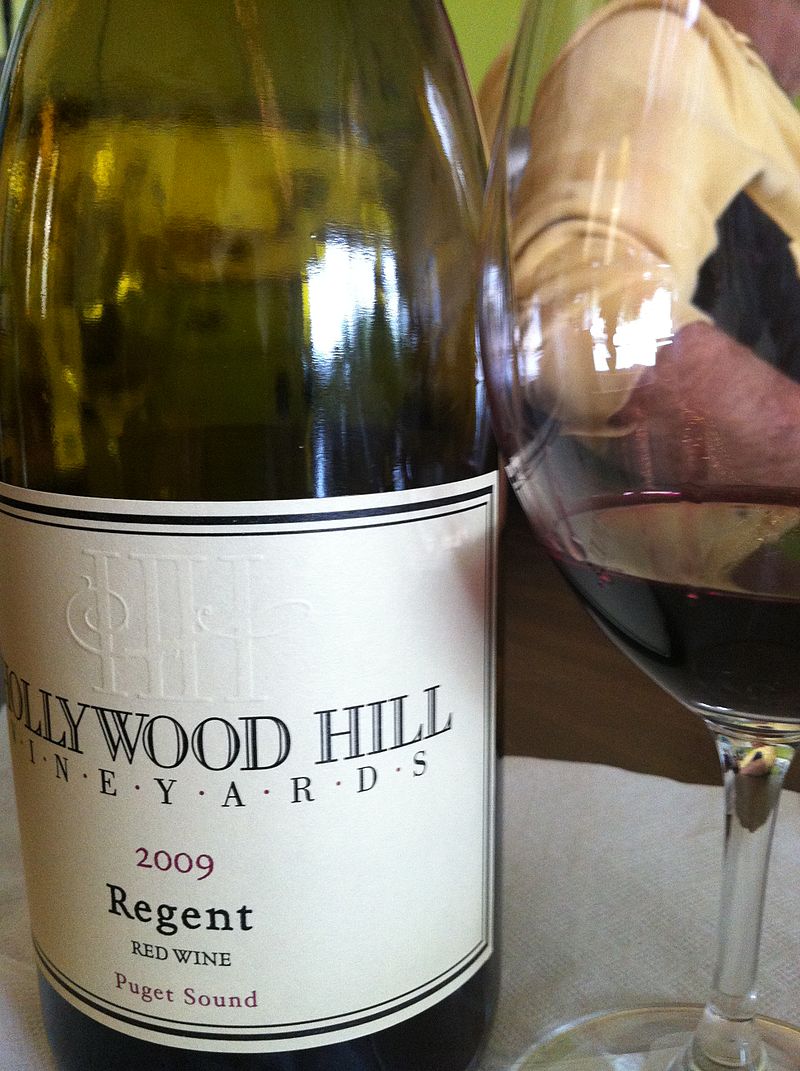
Reds: Leon Millot, Marechal Foch, Regent, Cascade, Burdin 6055, Noiret

Notes:
1. These are crosses of Vitis vinifera (French winegrapes, which have great flavor for wine) and American grape species (which have more disease resistance and which ripen earlier). It is old-fashioned crossing--putting the pollen of one grape on the uva (egg) of another, and a few years later you find out what you've got (because it takes a few years for a grape to mature enough to bear fruit). Sometimes (including lots of additional crossings--each of which takes more years) a terrific new variety is developed.

2. Some call the modern varieties "hybrids," but that term  is perjorative to some people, as "hybrid" is a synonym for "bastard," "crossbreed" and "mongrel." Hey, we are all mongrels but the term is negative.

3. Why the push for modern varieties of winegrapes? Because they are so "green." They don't require fungal sprays (unlike vinifera, which require so much spray that Europe is considering regulating their spraying. Even if the grower uses organic sprays, it still requires a lot of tractor fuel to apply all those sprays). They ripen earlier, which is an advantage in the PacNorwest (it's more likely to beat the Fall rains and it can even sometimes avoid the predations of birds, without having to install nets).

4. I choose not to grow Marquette because it has very high acid and thus is much more work in the winery. Ditto with Baco Noir.


Wednesday, October 3, 2012

Pretty Darn Good Harvest Weather

I have a few "modern varieties" of grapes still hanging, but have harvested seven varieties already (they ripen earlier than vinifera do, as a general rule). But I think most vinifera grapes are still out there on the vines. Their growers are glad to see a later-than-average start to our famous Fall rains.

The 15-day forecast shows 100% chance of of our first heavy rain on Oct 15, so that is a target date for some growers who will want to pick before it hits. But other growers who need a touch more ripening may wait through that cycle (they'll rightly say that their grapes needed a quick freshening from some rain; they may even rightly say that a bit of rain can push more carbohydrates (sugars) into the fruit, which at first seems counterintuitive). Too early to tell, yet, when the next rain will come, after the first wave hits. There is typically a following period of regained nice weather, after the first rain.

But usually the first Fall rains come in late Sept or early Oct.

We've had a very unusual drought this year--only 0.25" of rain in the July 1-Sep 30 quarter! That's the least in EIGHTY YEARS! And we always get rain until July 4-5 or so, so this is quite unusual.

Wed, Oct 3Sunny. Mild.68°F48°F16 mph / NE22%66°FLow4%
Thu, Oct 4Sunny. Mild.69°F41°F11 mph / NE24%66°FLow5%
Fri, Oct 5Passing clouds. Mild.69°F43°F11 mph / ENE22%67°FLow5%
Sat, Oct 6Passing clouds. Mild.71°F39°F10 mph / NE23%67°FLow8%
Sun, Oct 7More sun than clouds. Mild.74°F37°F5 mph / ENE23%69°FLow13%
Mon, Oct 8Scattered clouds. Mild.72°F39°F4 mph / W27%69°FLow19%
Tue, Oct 9Scattered clouds. Mild.71°F39°F6 mph / NW33%68°FLow27%
Wed, Oct 10Sunny. Mild.69°F35°F4 mph / NNE45%69°FLow0%
Thu, Oct 11Sprinkles late. Mostly cloudy. Mild.72°F35°F7 mph / SSE73%74°FMinimal26%0.08"
Fri, Oct 12More sun than clouds. Mild.69°F35°F1 mph / NE69%69°FLow10%
Sat, Oct 13Mostly sunny. Mild.70°F36°F7 mph / NE50%70°FLow0%
Sun, Oct 14Light rain late. Partly sunny. Mild.72°F39°F9 mph / S70%74°FMinimal37%0.09"
Mon, Oct 15Rain late. Mostly cloudy. Mild.70°F39°F14 mph / SW83%70°FMinimal100%0.71"
Tue, Oct 16Scattered showers. Mostly cloudy. Mild.68°F36°F11 mph / SW76%68°FMinimal63%0.24"
Wed, Oct 17Light rain late. More sun than clouds. Mild.64°F32°F6 mph / SSE79%64°FLow20%0.11"

(above forecast info is taken from myforecast.com)

Wine and Your Health: Getting Real

 Here are two articles on wine and our health: 1. First article : Grapes are a superfood that lower bad chloresterol. Many of their healthy ...