Monday, August 13, 2018

Maryhill Winery to build a wine tasting room on the Vancouver waterfront!

This is good news. That development is exciting--close to our Vancouver house. It will continue to drive Vancouver forward economically.

I view Maryhill as a sound winery in a great location and with a great business plan. Their "Reserve" wines can be very good.


Friday, August 10, 2018

Hybrid wines continue to draw hatred and fear in Europe

This article explains just how much fear and hatred the vinifera world of Europe feels towards modern grape varieties. The animosity is the result of a century of carefully-fanned flames of prejudice. Modern varities of grapes (hybrids) are the answer to Europe's dirty little secret: Growers there are killing their vineyard workers and sterilizing their soil (killing earthworms and beneficial nematodes) with nasty sprays for fungus. But the modern grapes don't need fungal sprays--due to their partial American heritage, they have resistance!

And the flavors are good, too. I win blue ribbons with these new varieties.

But Europe has millennia of well-honored tradition, and resists change.

Let's all please drop the prejudice and the hate, and start saving lives.


(photo credit Google images)

Thursday, August 9, 2018

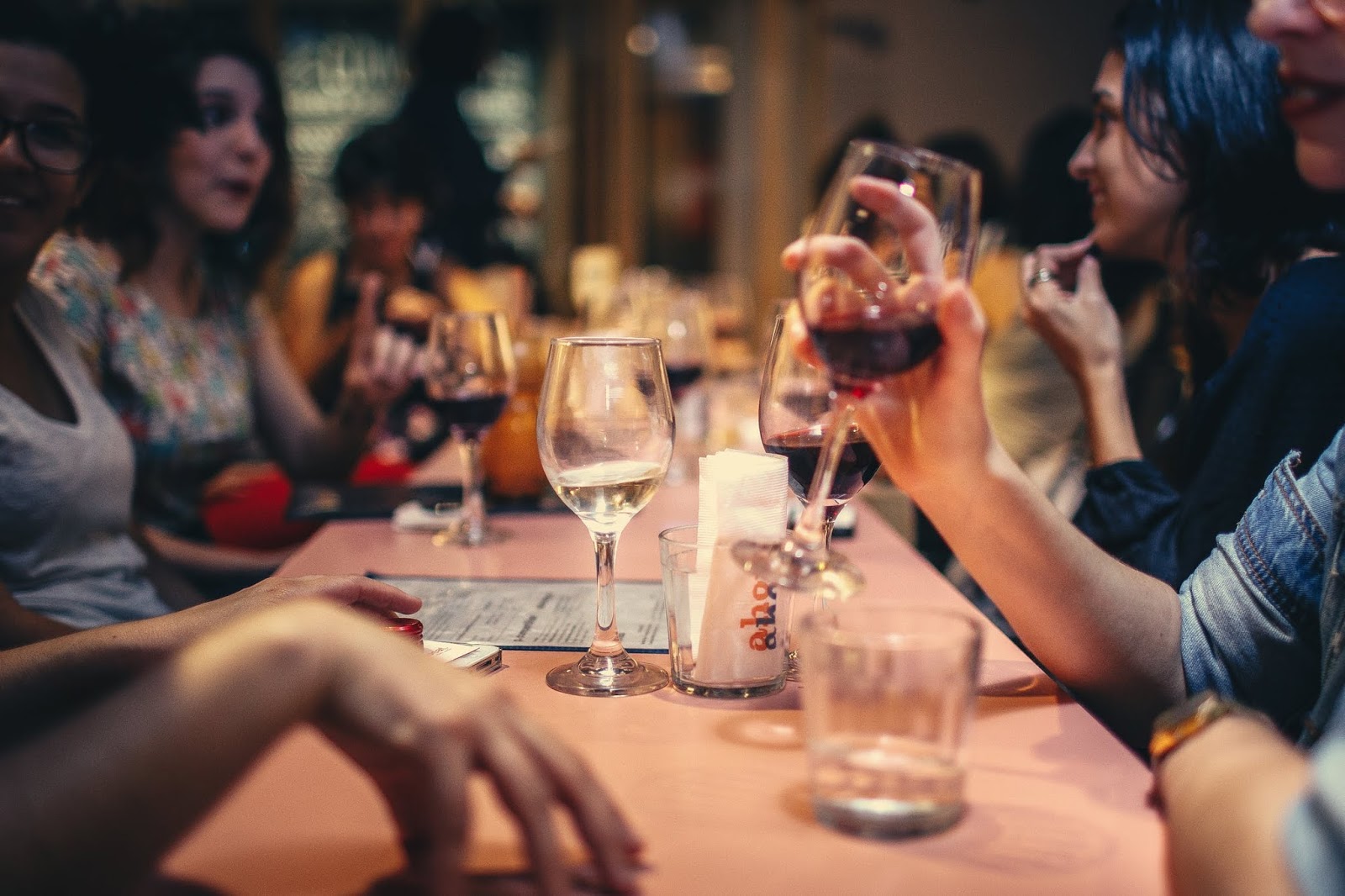
Moderate drinking correlates wtih a lower risk of mental degradation

This British study indicates that both nondrinkers and heavy drinkers have a higher risk of developing dementia, which those who drink from 1-14 servings of alcohol per week see a lower rate of dementia.

So, drink up! But in moderation!


(photo credit: pexels.com)

Sunday, August 5, 2018

The ugly truth about the USA's western forest fires

This article explains how we have caused the massive, destructive California (and Oregon and Washington and Idaho) wildfires: In nature, about a quarter of that area's forests would see a fast-moving fire every year, which cleared out the brush, pine and fir needles, and understory plants, while sparing the large trees. Those are relatively "cool" fires, which pass through an area quickly. But they still do cover the area with smoke and haze.

But we fight the fires, preventing them from doing what nature wants, and allowing the understory brush to thrive, until a fire comes along that is so hot and fast-growing that it can overpower our firefighting efforts, and then there is so much fuel that even the large trees burn, which makes the fire linger over any one particular place and burn much hotter. And of course our homes and barns burn then, also.

What we should do is allow the frequent fires to keep the forest floor clean, and design our rural homes to survive a fast-moving "cooler" fire (large no-plant buffer around the homes). That is the price of living in the dry West--a very sparse yard, and a house made of fire-resistant materials.  Then, we could save many billions in firefighting costs, and lives. But the dry West would be smoky every summer.

But smoke is not good for grapes. It taints the flavors. Hot fires can even kill the grapevines.

So maybe we shouldn't be growing grapes in the dry West, you say? Hmm. Maybe that's right.

I have been saying "dry West," because there is a "wet West"--it's the area west of the Cascades in OR and WA. However, smoke blows wherever the wind takes it, and often lately, therer's been too much smoke and haze in the wet West for ideal grape conditions. So it's an issue in the entire west. But in most years, the wet West has enough good onshore winds, blowing from the cool, clean Pacific, that the grapes here do fine.

Lots to think about. I believe a wise government would start requiring homes to be built (and retrofitted) to be more fire-safe, and then let the forests burn, and fight the fires only to protect designated "safe areas" that are small towns and large cities. We are unable to defeat these megafires, so we need to let their awful destructive power occur once, and then perhaps the frequent cooler fires that keep the floor clean won't be so difficult to deal with, as we let them burn.

(photo credit: Google images)


Saturday, August 4, 2018

New Winery Sign - best use found yet for a wine barrel (no, they are not very good for holding wine)

I made this from the end of a French wine barrel:

1. Cut off end of barrel, keeping about 5" of the staves
2. Hammer hoops tight, then drill and screw them to the staves
3. Stain the sign
4. Take your winery name and logo in a digital file to a woodworder skilled in CNC routing, to carve those into both sides of the face, 1/4" deep
5. Take the sign to a signpainter, to have her paint the name and logo a contrasting color
6. Apply marine spar finish (multiple coats) to every side
7. Caulk the spaces between the hoops and staves
8. Drill and attach eye bolts with washers and nuts, 11" apart
9. Drill and attach hook screws to underside of hanging beam
10. Make and attach, by nails to the top side of the hanging beam, an 8" wide x 3 long cedar roof, painted with marine spar varnish, to keep some of the rain off of the sign
11. Hang the sign

Voila! Because, marketing.


Monday, July 23, 2018

2015 Pra Vinera Reserve Cab - WOW!

I can't recall who gave this to me, but WOW! If you ever wanted to find out what a true Cab Sauv flavor is (it's black currants), this wine has it in spades. So smooth. Liquid velvet. The sensation just rolls. Perfect body. Perfect balance. THIS is how it's done.

Napa at its best. Wow.

Tuesday, July 3, 2018

The bottling season is upon us

We've bottled almost all the 2017 Epona wines now, starting with the whites and roses, and finishing with the reds and pourt wines. ("Pourt" is a common-law trademark owned by Epona, LLC, and Kenton Erwin of Woodland WA. I invented that made-up word, using a "u" to keep it from upsetting our friends the Portuguese of the Douro area.)

Everything has a season (turn, turn, turn). The mowing season is winding down (we don't irrigate our field grass--why would we? why would you?). The watering season has not quite appeared in earnest. This is the bottling season, to make room in tanks and other liquid-holding vessels for the coming Fall crop of winegrape juice. At this time, you and your racking wand are on very intimate terms. And, once corked, the work is not nearly over: You bottle, and adjust the fill levels in the bottles. You cork the wines. You rinse and dry the bottles. Then, for three days, the bottles sit upright, to bleed out the compressed air caused by pushing the corks in. Then they are capsuled and labeled, and laid down to age (for a short or a long while, depending upon the wine's character and the strength of your resale market).

In the photo (credit to Merry Edwards Winery), this is how they, and we, and countless others, do it. The Italian floor corker is a key component for any small-to-medium sized winery.

There was a guild of winemakers in the Middle Ages, just like the guilds of blacksmiths, millers, coopers, etc. In Italy the winemakers are called "Vinari," and I have a little terra cotta plaque with "Vinari" and a wine bottle on it (from northern Italy), to remind me of the long history of my craft, and how much others know and knew, compared to me.

Winemaking is a great way to keep in touch with your humble side, to sharpen up on Murphy's Law, and to, just sometimes, just occasionally, maybe impress yourself with what you can do with some great fruit and a couple of years. Sometimes ;)


Wine and Your Health: Getting Real

 Here are two articles on wine and our health: 1. First article : Grapes are a superfood that lower bad chloresterol. Many of their healthy ...