Garnacha is called Grenache in France, and in France it's a common part of the "GSM blend" - Grenache, Syrah and Mourvedre in a Rhone blend wine. In Spain, Garnacha finds a special and perfect combination, where high altitude vineyards enjoy bright sun and cool nights, and the vineyards there are often old vines (a hundred years or more), and as a result the wines are remarkable.
Bodega Borsao is located northwest of Zaragoza (Spain's fifth-largest city), in northern Spain. They make several wonderful Garnachas. I have sold a lot of their Tres Picos Garnacha (in the $12-14 range), but lately I discovered their midpriced Monte Oton Garnacha (which I'm selling for just $8; it is "grown on the windswept slopes of the extinct Moncayo volcano"), and they have a lower-end Garnacha which is sold out here in Oregon presently. All these wines show great purple fruits and are round and smooth, with just enough structure to support a wonderful meal (which should include a red meat, if you eat that way).
We get to visit Bodega Borsao in just a few weeks; can't wait!
Monday, March 23, 2015
Monday, February 2, 2015
One of the ULTIMATE QUESTIONS: CAN OREGON PINOT NOIR AGE?
Friends, as you know, this is an important question. I've been a wine retailer for eight years now, and approximately 400 of you over that time have bought far more SE Washington wines from me, and other wines (many from Spain and Italy, which easily win the QPR (quality-to-price ratio) contest), compared to our Oregon Pinots. I think for most of you, it's either about the taste, the flavor profile, or the cost, of that wine, and/or you have been frustrated with what you perceive as these traits of Oregon Pinots:
1. They can be inconsistent from bottle to bottle;
2. They mutate, over time, more than any other grape I've known, whipsawing the poor wine lover into fear and indecision;
3. The French like to say (as they have told me, in Burgundy), that Oregon Pinots are good while young but "do they age?"; and
4. They are pretty darn expensive.
Despite all that, you have to admit, as I freely do, that, at their best, they are some of the best wines in the world. And Oregon Pinot is "Portland's Wine," and deserves our attention for that reason also.
I have had an aged Echezeaux (grown next to DRC), sold from under the table to me at a great restaurant in Dijon, and held for a few years, and, when finally opened, it was very good but not as good as the best Oregon Pinots I've had, from the likes of J.K. Carierre, Anderson Family Vineyards, Beaux Freres, Adelsheim, and Domaines Drouhin and Serene (and others; not trying to make an exclusive list here).
Fast forward to J. K. Carriere. Jim Prosser built his winery a few years ago, uphill from Harry's Chehalem landmark; before that, Jim was in the barn at a B&B with a hazelnut orchard near Newberg (with a really cool representation of a viking longboat in the attic). I first learned about Jim when Cliff Anderson, my first (and best) mentor in Willamette Valley grapegrowing and winemaking, sold fruit to him, so I went to taste Jim's wines, and like Cliff, Jim was a real artist. He had some older bottles open for special customers. I wheedled a taste of his 1999 Pinot, and I'm sure glad I did--it was unbelievably great--truly outstanding in about 2004, and it cemented in me an opinion that Jim knew how to make ageworthy Pinots (because that '99 seemed built to last).
Fast forward to 2015. We're selling our city house (having moved to a farm near Woodland WA), and I'm selling some wines at auction, because our new home's cellar (and house) are smaller and we have too much wine. I have been holding a 2002 J.K. Carriere Pinot Noir with a note on the neck saying simply, "Purchased Sept 2004: Keep til 2010; drink by 2020."
If you're paying attention, and if you understand the discussions about Oregon Pinots, you will be wondering, "Can a good Oregon Pinot really last 13 years?" If you really understand Oregon Pinots, you'll know that 2002 was a special year: very good conditions for the fruit, and likely to age well. So, this bottle presented a fair test.
Life with Oregon Pinot Noirs is all about data points, like taking snapshots of a running cheetah. You can talk about the snapshots, but you cannot make too many sweeping conclusions about the "movie," because the data is too varied. Unlike Christophe Baron's marvelous, inexplicably-high pH Syrahs from The Rocks vineyard, which establish their nature early on, and then hold it, only refining and tweaking their upscale flavor profile, the best Oregon Pinots have this mystique in which we don't really know how they will evolve, or whether they will be so subtle that we miss the point, and we don't often know what we'll get when we pull the bottle out. Sometimes, the wines go dumb and just shut down for a while. Enjoying Oregon Pinots takes WORK and a willingness to take risks. It's also an expensive habit, especially when not every bottle is what you hoped for. A good Oregon Pinot is a will-o-the-wisp. You pull the cork and you ask, "what have we here?" and even if you drank its sister yesterday, today its sister may be different. Warmer summers are not necessarily a friend of Pinot Noir, either, though Gamay and Syrah may be creeping northwards. Pinot in Bellingham, anyone? So, even how Pinot grows here is changing.
So, the '02 J.K. Carriere. It was a fascinating bottle to open tonight (with a gorgeous Steelhead, roasted simply with just lemon, salt, and pepper). The first thing I noticed, AT THIRTEEN YEARS OF AGE, was the vibrancy of youthfulness--deep purple color and pleasant purple fruits in the nose. Game over. A wine past its prime cannot, will not, look young. Without any delay or decant, this wine was energetic and ready to go--first sip was delightful. It didn't change much in the glass, but stayed faithful for a good hour or so: Wonderfully balanced, smooth, just subdued enough to support the food without clamoring for attention, and yet so elegant that through some sense of feigned shyness it drew attention to its excellence. Wow! This bottle, a snapshot in time, was pretty high up on the Pinot Noir quality scale. Vibrant purple fruits! Smoothness! A good finish! It referred not to other wines; it made its own statement. In its way, in its time tonight, it was perfect.
And chalk up one data point for Oregon's excellence in ageworthiness. Say that Oregon Pinots are too spendy (correct). Say that Pinot Noir can be unpredictable or inconsistent (correct). Say that too many wine lovers don't understand or appreciate good Pinot (correct). Say that California Pinots are quite different (correct, and many prefer them to Oregon Pinots). But tonight, this Pinot was perfect. I just wish I had more of them. If more of them would be like this ;)
1. They can be inconsistent from bottle to bottle;
2. They mutate, over time, more than any other grape I've known, whipsawing the poor wine lover into fear and indecision;
3. The French like to say (as they have told me, in Burgundy), that Oregon Pinots are good while young but "do they age?"; and
4. They are pretty darn expensive.
Despite all that, you have to admit, as I freely do, that, at their best, they are some of the best wines in the world. And Oregon Pinot is "Portland's Wine," and deserves our attention for that reason also.
I have had an aged Echezeaux (grown next to DRC), sold from under the table to me at a great restaurant in Dijon, and held for a few years, and, when finally opened, it was very good but not as good as the best Oregon Pinots I've had, from the likes of J.K. Carierre, Anderson Family Vineyards, Beaux Freres, Adelsheim, and Domaines Drouhin and Serene (and others; not trying to make an exclusive list here).
Fast forward to J. K. Carriere. Jim Prosser built his winery a few years ago, uphill from Harry's Chehalem landmark; before that, Jim was in the barn at a B&B with a hazelnut orchard near Newberg (with a really cool representation of a viking longboat in the attic). I first learned about Jim when Cliff Anderson, my first (and best) mentor in Willamette Valley grapegrowing and winemaking, sold fruit to him, so I went to taste Jim's wines, and like Cliff, Jim was a real artist. He had some older bottles open for special customers. I wheedled a taste of his 1999 Pinot, and I'm sure glad I did--it was unbelievably great--truly outstanding in about 2004, and it cemented in me an opinion that Jim knew how to make ageworthy Pinots (because that '99 seemed built to last).
Fast forward to 2015. We're selling our city house (having moved to a farm near Woodland WA), and I'm selling some wines at auction, because our new home's cellar (and house) are smaller and we have too much wine. I have been holding a 2002 J.K. Carriere Pinot Noir with a note on the neck saying simply, "Purchased Sept 2004: Keep til 2010; drink by 2020."
If you're paying attention, and if you understand the discussions about Oregon Pinots, you will be wondering, "Can a good Oregon Pinot really last 13 years?" If you really understand Oregon Pinots, you'll know that 2002 was a special year: very good conditions for the fruit, and likely to age well. So, this bottle presented a fair test.
Life with Oregon Pinot Noirs is all about data points, like taking snapshots of a running cheetah. You can talk about the snapshots, but you cannot make too many sweeping conclusions about the "movie," because the data is too varied. Unlike Christophe Baron's marvelous, inexplicably-high pH Syrahs from The Rocks vineyard, which establish their nature early on, and then hold it, only refining and tweaking their upscale flavor profile, the best Oregon Pinots have this mystique in which we don't really know how they will evolve, or whether they will be so subtle that we miss the point, and we don't often know what we'll get when we pull the bottle out. Sometimes, the wines go dumb and just shut down for a while. Enjoying Oregon Pinots takes WORK and a willingness to take risks. It's also an expensive habit, especially when not every bottle is what you hoped for. A good Oregon Pinot is a will-o-the-wisp. You pull the cork and you ask, "what have we here?" and even if you drank its sister yesterday, today its sister may be different. Warmer summers are not necessarily a friend of Pinot Noir, either, though Gamay and Syrah may be creeping northwards. Pinot in Bellingham, anyone? So, even how Pinot grows here is changing.
So, the '02 J.K. Carriere. It was a fascinating bottle to open tonight (with a gorgeous Steelhead, roasted simply with just lemon, salt, and pepper). The first thing I noticed, AT THIRTEEN YEARS OF AGE, was the vibrancy of youthfulness--deep purple color and pleasant purple fruits in the nose. Game over. A wine past its prime cannot, will not, look young. Without any delay or decant, this wine was energetic and ready to go--first sip was delightful. It didn't change much in the glass, but stayed faithful for a good hour or so: Wonderfully balanced, smooth, just subdued enough to support the food without clamoring for attention, and yet so elegant that through some sense of feigned shyness it drew attention to its excellence. Wow! This bottle, a snapshot in time, was pretty high up on the Pinot Noir quality scale. Vibrant purple fruits! Smoothness! A good finish! It referred not to other wines; it made its own statement. In its way, in its time tonight, it was perfect.
And chalk up one data point for Oregon's excellence in ageworthiness. Say that Oregon Pinots are too spendy (correct). Say that Pinot Noir can be unpredictable or inconsistent (correct). Say that too many wine lovers don't understand or appreciate good Pinot (correct). Say that California Pinots are quite different (correct, and many prefer them to Oregon Pinots). But tonight, this Pinot was perfect. I just wish I had more of them. If more of them would be like this ;)
Saturday, January 17, 2015
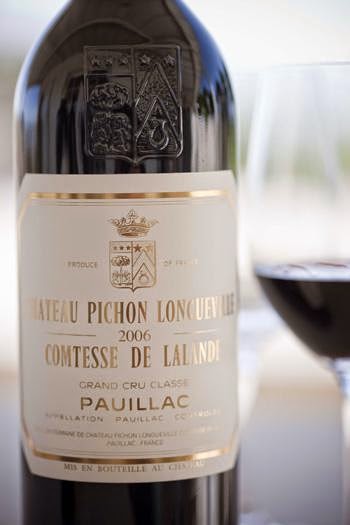
Chateau Pichon Lalande
Chateau Pichon Longueville Comtesse de Lalande is my favorite Bordeaux label. A Super-Second Growth (a Second Growth that is widely considered as First-Growth quality), it presents excellent quality for a price, while still high, that is much lower than the price of the First Growths. Thus, it's "Bordeaux QPR" is very good.
For me, Pichon Lalande's characteristic uniqueness includes notes of blackcurrants and violets. Even from an average year, at about 25 years old, a Pichon Lalande recently blew me away as the best old Bordeaux tasted, at one of my Bordeaux tastings. I have sped up my search to find more, ever since that wonderful day.
Excited to visit the winery during our upcoming trip back to Bordeaux. We also get to see the Mouton wine museum, and taste from barrel there. Talk about bucket list!
For me, Pichon Lalande's characteristic uniqueness includes notes of blackcurrants and violets. Even from an average year, at about 25 years old, a Pichon Lalande recently blew me away as the best old Bordeaux tasted, at one of my Bordeaux tastings. I have sped up my search to find more, ever since that wonderful day.
Excited to visit the winery during our upcoming trip back to Bordeaux. We also get to see the Mouton wine museum, and taste from barrel there. Talk about bucket list!
Wednesday, January 14, 2015
Tannins in tea and wine - why cheese works with red wine!:
Interesting report from Univ of Minnesota:
Tannins are found throughout the plant world, and at least one of their properties has been known for some time. The word ‘tannin’ is derived from the process of using plant extracts to cure leather (tanning). This highlights one of the principal chemical aspects of tannins – they are highly reactive with proteins. Tannins play an important role in both grapes and wines. In wine, the perception of astringency on the palate is attributed to tannins. In your mouth they bind with salivary proteins and cause the proteins to precipitate. The end result is that your mouth will lack the lubrication that saliva provides. Thus, astringency caused by tannins are very much a tactile sensation in your mouth. This is why we often will describe the sensation of tannins as silky or rough.
The British learned long-ago that a splash of milk in their black tea can make it more palatable. This works because instead of reacting with the salivary proteins in the mouth, the tannin extracted from the tea leaves reacts with milk protein (casein), resulting in a beverage that is less astringent. The same thing occurs when one consumes red wine with cheese. The proteins in the cheese react with the tannins in the wine, making the wine seem less harsh. Tannins are what make drinking red wine with a high-protein food like steak such an enjoyable experience.
Tannins are found throughout the plant world, and at least one of their properties has been known for some time. The word ‘tannin’ is derived from the process of using plant extracts to cure leather (tanning). This highlights one of the principal chemical aspects of tannins – they are highly reactive with proteins. Tannins play an important role in both grapes and wines. In wine, the perception of astringency on the palate is attributed to tannins. In your mouth they bind with salivary proteins and cause the proteins to precipitate. The end result is that your mouth will lack the lubrication that saliva provides. Thus, astringency caused by tannins are very much a tactile sensation in your mouth. This is why we often will describe the sensation of tannins as silky or rough.
The British learned long-ago that a splash of milk in their black tea can make it more palatable. This works because instead of reacting with the salivary proteins in the mouth, the tannin extracted from the tea leaves reacts with milk protein (casein), resulting in a beverage that is less astringent. The same thing occurs when one consumes red wine with cheese. The proteins in the cheese react with the tannins in the wine, making the wine seem less harsh. Tannins are what make drinking red wine with a high-protein food like steak such an enjoyable experience.
Saturday, January 10, 2015
2011 Alto Cinco Garnacha
Wow! What a great wine, and I am selling it for just $9. Fantastic bouquet including flowers and spices and purple fruits, and great in the mouth. Smoother and more complex than other wines costing four times as much! I am hoping to visit this winery in April this year.
I have sold 33 cases of this wine over the past month. Getting rave reviews from my customers. So glad I found it!
Sunday, November 30, 2014
"Interstellar" the movie
Warning: This is not about wine (much):
The movie "Gravity" was a horrific fiasco. I love Sandra Bullock, but there were so many scientifically-impossible moments in the movie, coupled with so many implausible moments (in terms of characters, actions, etc.) that one could be forgiven for wondering if some sort of non-human made the movie, say, a recently-raised-to-sentience dog who understood nothing at all about human nature, NASA, motions of bodies in space, or moviemaking. Bullock did a great job in the movie; it wasn't her fault.
So it was with some trepidation that I approached Interstellar, but having read that the movie makes a concerted effort to get the theoretical science right, I went for it. Glad I did. The movie gets an enthusiastic B+, by which I mean fairly high praise.
The strengths of "Interstellar" are:
1. It provokes useful thoughts about science and humanity (as opposed to Gravity, which provoked only thoughts negative about the movie).
2. There are several truly gripping moments in the film, with great suspense.
3. At times the heavy organ in the soundtrack was a powerful companion to the movie's mood, and also somehow helped the story along as well.
4. The flick takes a deep look at the current boundaries of our understanding of science. In some ways it's a nice adjunct to a real science class. Yet it didn't feel too preachy.
5. If you are a dad with a young daughter (or if you ever were), you will probably get wet eyes. The film has several very realistic human interactions, and of course this is where 99% of SciFi flicks fall short.
6. The movie gets a lot, an awful lot, of the science right, such as its attention to the relativistic effects of fast travel upon the perceptions of time, and such as the difficulty of docking in space.
7. The evilness of the Matt Damon character was well-portrayed and believable. Most crooks are clumsy and make mistakes, and make it up as they go along.
8. Great scenes of planetary movement! Unlike the fantasy of Star Wars, vehicles cannot swerve and turn in space, as they can in an atmosphere. The movie really, really gets this right.
9. Interviews of actual Dust Bowl survivors were a wonderful addition to the movie, as they were relevant to the story and also interesting.
10. Cool robots! Cool walking mechanism. Way better than "Hal" in 2001.
11. Some killer sets and graphics. Those alone are worth the price of admission.
Interstellar is long but for me it was the right length.
There are, unfortunately, many negatives about the movie:
a. We're told that the Blight killed wheat and okra, but not corn. OK, but what about rice, barley, oats, apples, etc.? And, to feed the world, we could also take much more food from the sea: more farmed fish, more consumption of seaweed, etc. No mention was made in the movie of turning to the sea for more food, when the sea covers three-fourths of our planet!
b. It was cloyingly Republican and Right-wing Christian to take the attitude that humans screwed up the Earth, so our duty now was to find a new planet. What about fixing the current planet, especially when so many Earthlings were about to die? Treating this place as put here for us to use up, to despoil (and to think that any kind of intelligent deity would want that kind of treatment of our planet), is one of the most-horrific aspects of beliefs held on the Right side of the political spectrum.
c. No way could fields of corn survive those dust storms, and yet the corn looked GREAT!
d. No way would Earth disband its military, in a time of starvation and mass human extinction.
e. How convenient, that a wormhole was placed next to Saturn! How wonderful, that current propulsion technology could get astronauts there in only two months!
f. Nothing can escape the event horizon of a black hole, except the astronaut did. Also, you can't see inside a black hole, except the astronaut could.
g. If the small shuttle was low on fuel, how could the large shuttle make an emergency rescue drop from outer space?
h. If a planet is covered by only 12" of water, how could it form waves a thousand feet high? Especially if it has high gravity?
i. If you spent the entire movie trying to fulfill a promise to return to your daughter, why would you spend only two minutes with her, as she lay on her deathbed? Lame lame lame.
j. Michael Caine's "Big Lie" was not in keeping with his otherwise noble character.
k. Is it really so easy to steal a spaceship, to travel to the wormhole and join the professor's daughter on the third planet? When she might be in love with the first astronaut who landed there? Talk about flying a long way just to be rejected! And the movie didn't show us at all that Cooper and the daughter Brand were in love.
l. A bookcase as the doorway between dimensions? Really? What, is this, the Chronicles of Narnia?
m. So, if we humans had progressed into inter-dimensional understanding, why did they allow all the killing and travail and misery to ensue, instead of just telling Cooper's daughter what she needed to know?
m. For what possible reason would the government deny its own Moon landings? One of its crowning achievements? Really?
n. What did the revelation to Murphy (Cooper's daughter) accomplish? She apparently didn't launch the huge concrete space station. And yet Earth survived long enough for a large-ish station near Saturn. With everyone starving, how did we accomplish that? And why did we need fifty-dimension help to accomplish a station near Saturn?
Anyway, yes--you should go see it. It will make you think. A little at least. What else are movies for?
Oh--the wine part: The movie never said if the Blight killed grapes! Why couldn't we just cover the planet with grapevines? My modern grape varieties carry huge loads of fruit. Talk about Heaven on Earth? LOL
The movie "Gravity" was a horrific fiasco. I love Sandra Bullock, but there were so many scientifically-impossible moments in the movie, coupled with so many implausible moments (in terms of characters, actions, etc.) that one could be forgiven for wondering if some sort of non-human made the movie, say, a recently-raised-to-sentience dog who understood nothing at all about human nature, NASA, motions of bodies in space, or moviemaking. Bullock did a great job in the movie; it wasn't her fault.
So it was with some trepidation that I approached Interstellar, but having read that the movie makes a concerted effort to get the theoretical science right, I went for it. Glad I did. The movie gets an enthusiastic B+, by which I mean fairly high praise.
The strengths of "Interstellar" are:
1. It provokes useful thoughts about science and humanity (as opposed to Gravity, which provoked only thoughts negative about the movie).
2. There are several truly gripping moments in the film, with great suspense.
3. At times the heavy organ in the soundtrack was a powerful companion to the movie's mood, and also somehow helped the story along as well.
4. The flick takes a deep look at the current boundaries of our understanding of science. In some ways it's a nice adjunct to a real science class. Yet it didn't feel too preachy.
5. If you are a dad with a young daughter (or if you ever were), you will probably get wet eyes. The film has several very realistic human interactions, and of course this is where 99% of SciFi flicks fall short.
6. The movie gets a lot, an awful lot, of the science right, such as its attention to the relativistic effects of fast travel upon the perceptions of time, and such as the difficulty of docking in space.
7. The evilness of the Matt Damon character was well-portrayed and believable. Most crooks are clumsy and make mistakes, and make it up as they go along.
8. Great scenes of planetary movement! Unlike the fantasy of Star Wars, vehicles cannot swerve and turn in space, as they can in an atmosphere. The movie really, really gets this right.
9. Interviews of actual Dust Bowl survivors were a wonderful addition to the movie, as they were relevant to the story and also interesting.
10. Cool robots! Cool walking mechanism. Way better than "Hal" in 2001.
11. Some killer sets and graphics. Those alone are worth the price of admission.
Interstellar is long but for me it was the right length.
There are, unfortunately, many negatives about the movie:
a. We're told that the Blight killed wheat and okra, but not corn. OK, but what about rice, barley, oats, apples, etc.? And, to feed the world, we could also take much more food from the sea: more farmed fish, more consumption of seaweed, etc. No mention was made in the movie of turning to the sea for more food, when the sea covers three-fourths of our planet!
b. It was cloyingly Republican and Right-wing Christian to take the attitude that humans screwed up the Earth, so our duty now was to find a new planet. What about fixing the current planet, especially when so many Earthlings were about to die? Treating this place as put here for us to use up, to despoil (and to think that any kind of intelligent deity would want that kind of treatment of our planet), is one of the most-horrific aspects of beliefs held on the Right side of the political spectrum.
c. No way could fields of corn survive those dust storms, and yet the corn looked GREAT!
d. No way would Earth disband its military, in a time of starvation and mass human extinction.
e. How convenient, that a wormhole was placed next to Saturn! How wonderful, that current propulsion technology could get astronauts there in only two months!
f. Nothing can escape the event horizon of a black hole, except the astronaut did. Also, you can't see inside a black hole, except the astronaut could.
g. If the small shuttle was low on fuel, how could the large shuttle make an emergency rescue drop from outer space?
h. If a planet is covered by only 12" of water, how could it form waves a thousand feet high? Especially if it has high gravity?
i. If you spent the entire movie trying to fulfill a promise to return to your daughter, why would you spend only two minutes with her, as she lay on her deathbed? Lame lame lame.
j. Michael Caine's "Big Lie" was not in keeping with his otherwise noble character.
k. Is it really so easy to steal a spaceship, to travel to the wormhole and join the professor's daughter on the third planet? When she might be in love with the first astronaut who landed there? Talk about flying a long way just to be rejected! And the movie didn't show us at all that Cooper and the daughter Brand were in love.
l. A bookcase as the doorway between dimensions? Really? What, is this, the Chronicles of Narnia?
m. So, if we humans had progressed into inter-dimensional understanding, why did they allow all the killing and travail and misery to ensue, instead of just telling Cooper's daughter what she needed to know?
m. For what possible reason would the government deny its own Moon landings? One of its crowning achievements? Really?
n. What did the revelation to Murphy (Cooper's daughter) accomplish? She apparently didn't launch the huge concrete space station. And yet Earth survived long enough for a large-ish station near Saturn. With everyone starving, how did we accomplish that? And why did we need fifty-dimension help to accomplish a station near Saturn?
Anyway, yes--you should go see it. It will make you think. A little at least. What else are movies for?
Oh--the wine part: The movie never said if the Blight killed grapes! Why couldn't we just cover the planet with grapevines? My modern grape varieties carry huge loads of fruit. Talk about Heaven on Earth? LOL
Friday, November 21, 2014
Southern Joaquin Valley in CA awash in hard-to-sell winegrapes
This is upsetting: Winegrapes from a huge portion of the southern San Joaquin Valley were sold this year for as low as $200 per ton. That is only $0.10 per pound. A lousy price for a grower.
To be sure, these aren't your upscale vineyards--these are factory-farmed grapes on vineyards thousands of acres big. Those grapes go into cheap wines. But the growers are switching to nut crops, which produce more revenue.
So the cheap-wine market may find a shortfall in grape supply. An ongoing pendulum shifting in grape/wine economics.
To be sure, these aren't your upscale vineyards--these are factory-farmed grapes on vineyards thousands of acres big. Those grapes go into cheap wines. But the growers are switching to nut crops, which produce more revenue.
So the cheap-wine market may find a shortfall in grape supply. An ongoing pendulum shifting in grape/wine economics.
Subscribe to:
Posts (Atom)
Wine and Your Health: Getting Real
Here are two articles on wine and our health: 1. First article : Grapes are a superfood that lower bad chloresterol. Many of their healthy ...
-
It makes sense that stuff floating in the air can stick to the grape and thus make its way into the wine. We know that smoke from forest fi...
-
Lenoir (sometimes called "Black Spanish") is a grape grown in South Texas, where it has excellent disease resistance and makes goo...
-
I used to think that the best way to store an opened bottle of wine was to stick the cork partway in the neck and put the bottle (red or w...